
Description
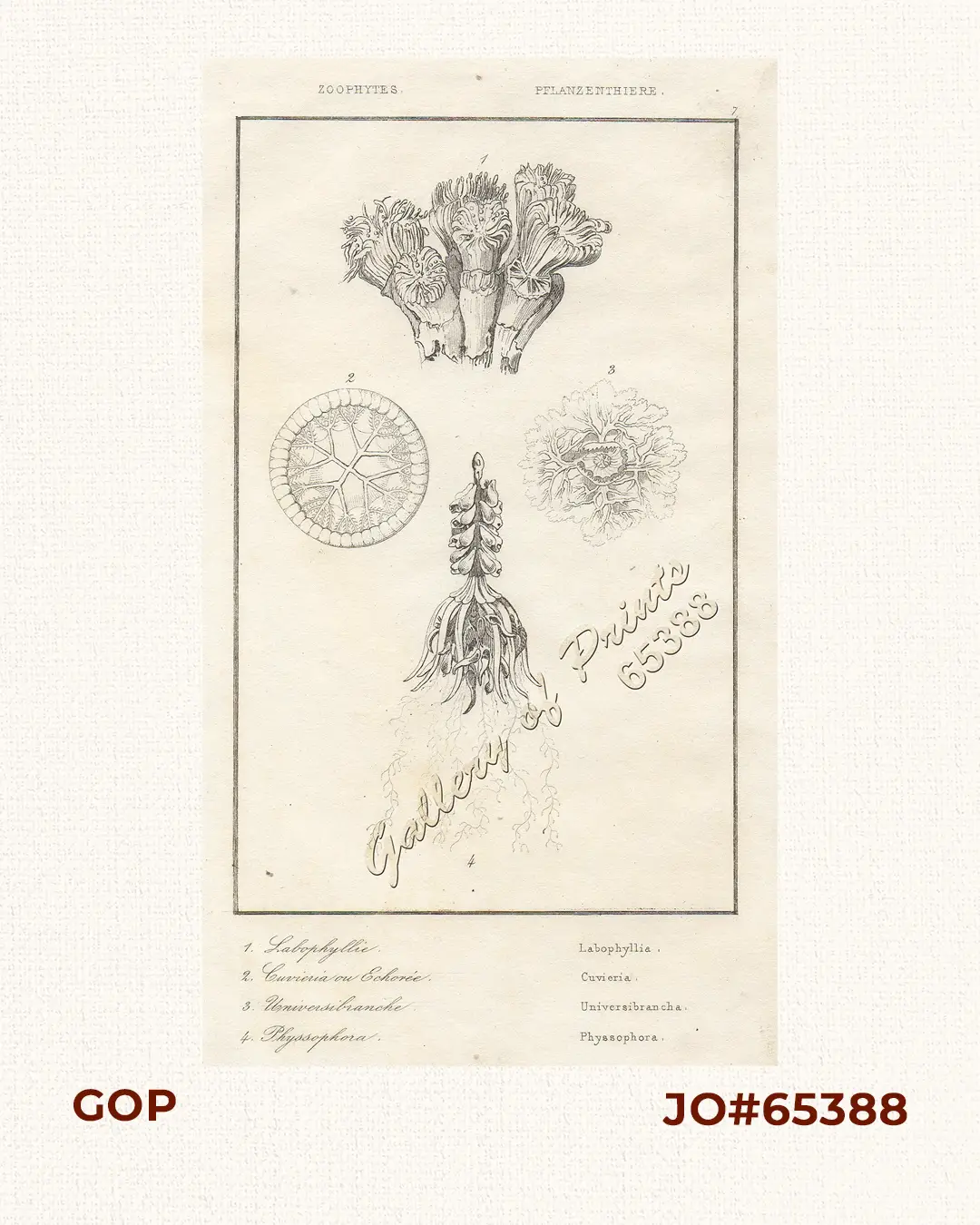
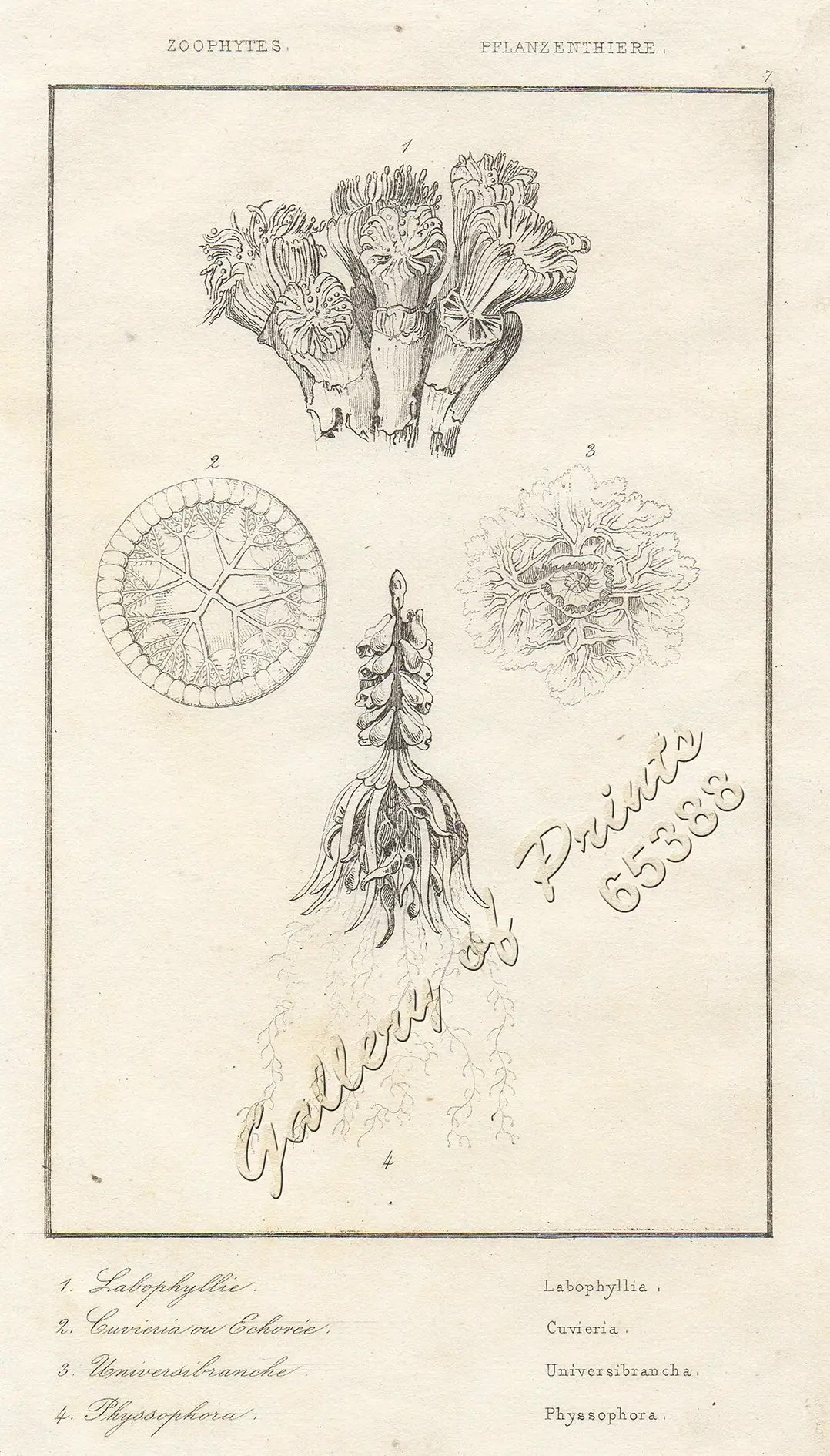
steel engraving botanical print from ‘L’Univers. Histoire et Description de Tous Les Peuples.: Océanie [History and Description of the Peoples of the World] Cinquième Partie du Monde. [Fifth Chapter of the World]‘, vol. 1, pl. 7.
A 19th-century botanical illustration depicting various marine organisms historically categorized as “Zoophytes” (or Pflanzenthiere in German), a term once used to describe aquatic animals that superficially resemble plants, such as corals and siphonophores.
1) Laborphyllie: A genus of large-polyp stony corals commonly known as lobed brain corals or open brain corals.
2) Cuvieria ou Echorée: A historical classification typically referring to a genus of pelagic marine gastropod mollusks (sea butterflies) or specific holothurians (sea cucumbers) studied by Georges Cuvier.
3) Universibranche: An outdated biological grouping or taxonomic name used during the 1800s to classify specific marine invertebrates based on breathing structures.
4) Physsophora: A fascinating genus of siphonophores—colonial hydrozoans closely related to jellyfish. The illustration captures its distinctive float (pneumatophore) at the top, swimming bells (nectophores) down the stalk, and a cluster of stinging tentacles hanging below.
![Citrus Decumana. L. [English: Pomelo. Tagalog: Suha]](https://www.gop.com.ph/wp-content/uploads/2023/08/JO5025-Hoola-1863-Citrus-Decumana-600x750.webp)
![Spathiphyllopsis Minahassae. T. et B. [Spathiphyllum]](https://www.gop.com.ph/wp-content/uploads/2023/08/JO54844-Hoola-1863-Flowers-Flora-Philippines-Indonesia-600x750.webp)
![Anona Reticulata. L. [English: Custard Apple / Sugar Apple Bullock's Heart / Sweetsop ; Tagalog: Atis]](https://www.gop.com.ph/wp-content/uploads/2023/08/JO54845-Hoola-1863-Anona-Reticulata-colour-fading-reamins-after-professional-cleaning-600x750.webp)