
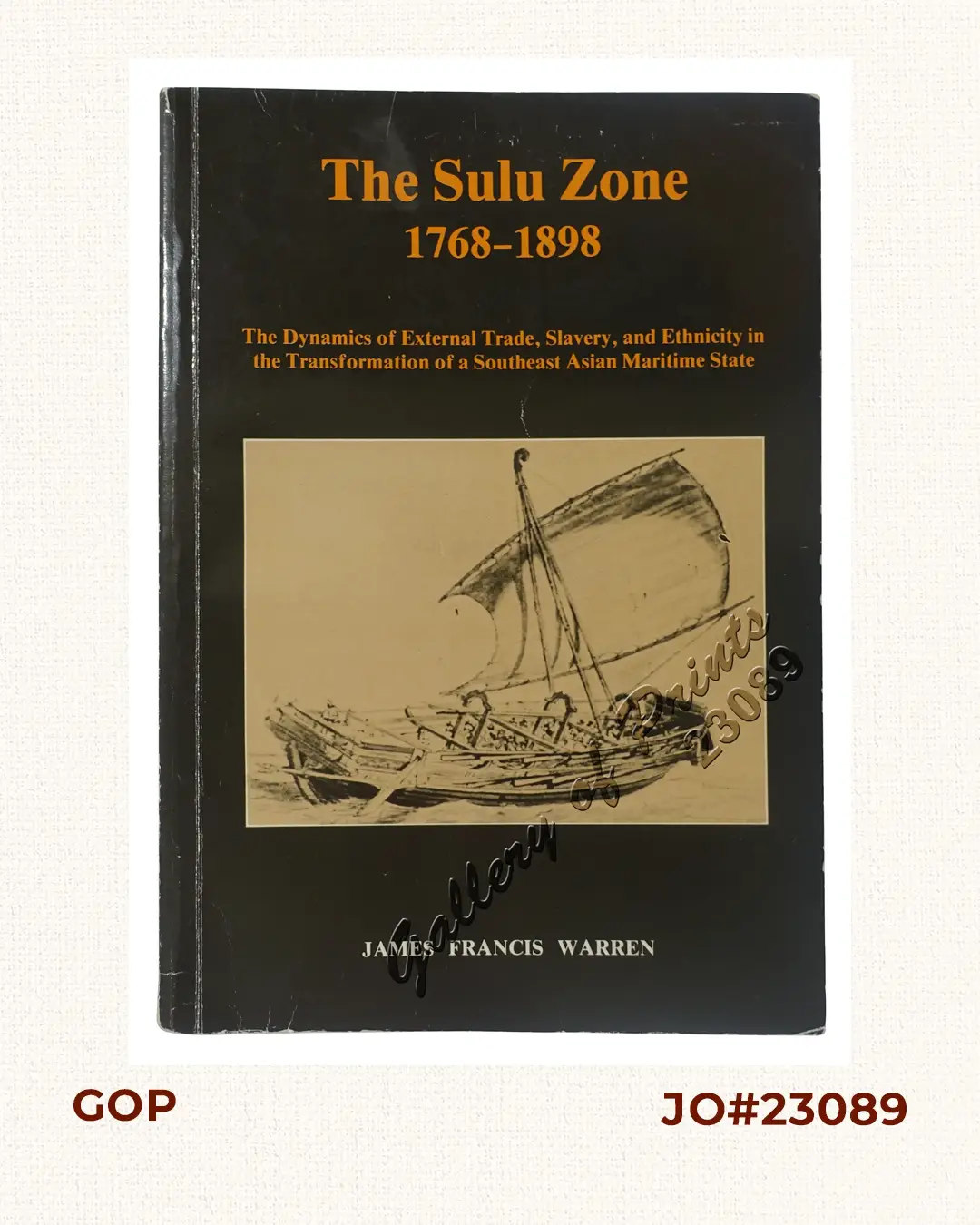
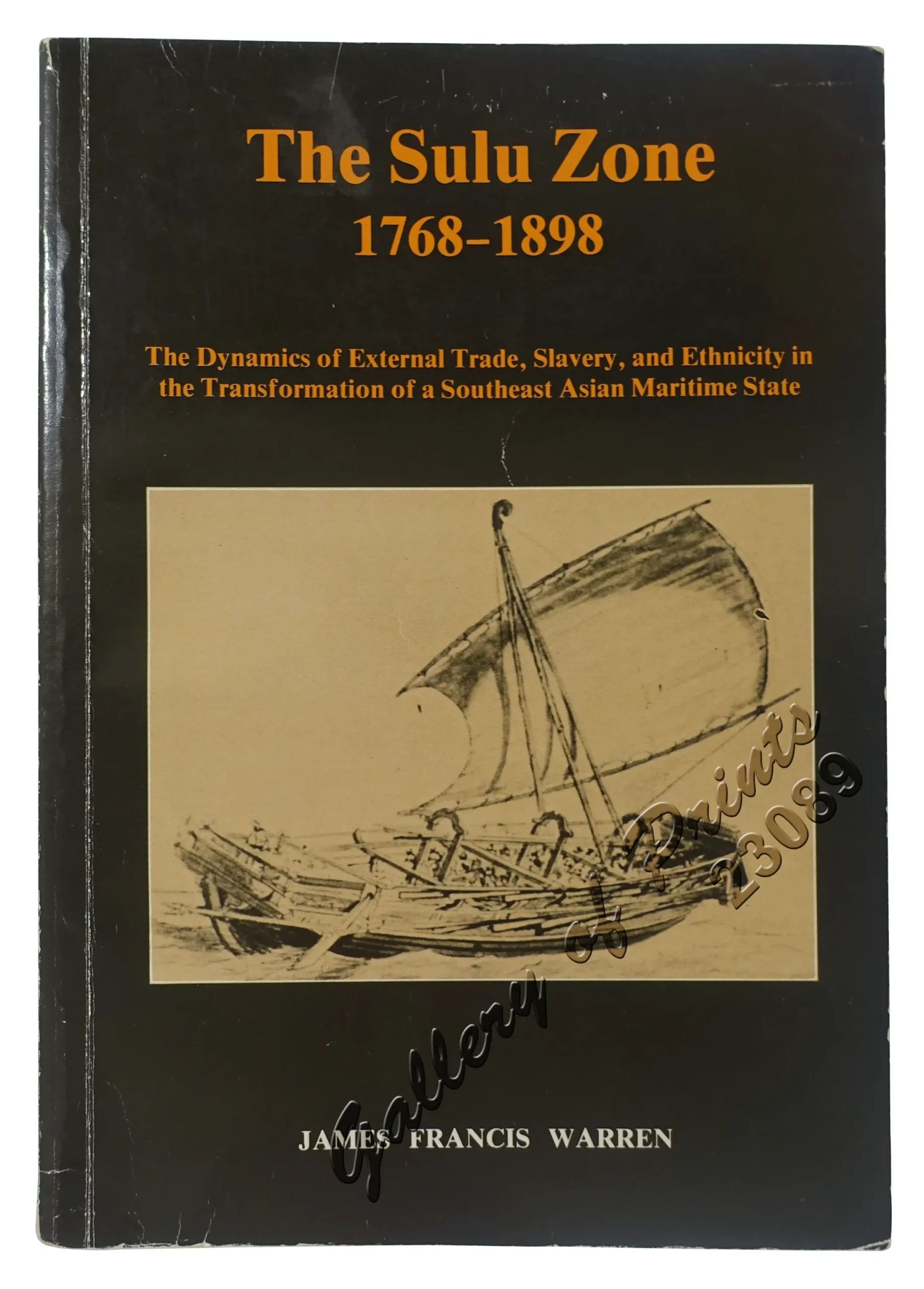
Description
400 pp., with 3 parts, 11 chapters; list of tables, list of maps, list of appendices, abbreviations; weights, measures, and currencies; preface, acknowledgements, and introduction.
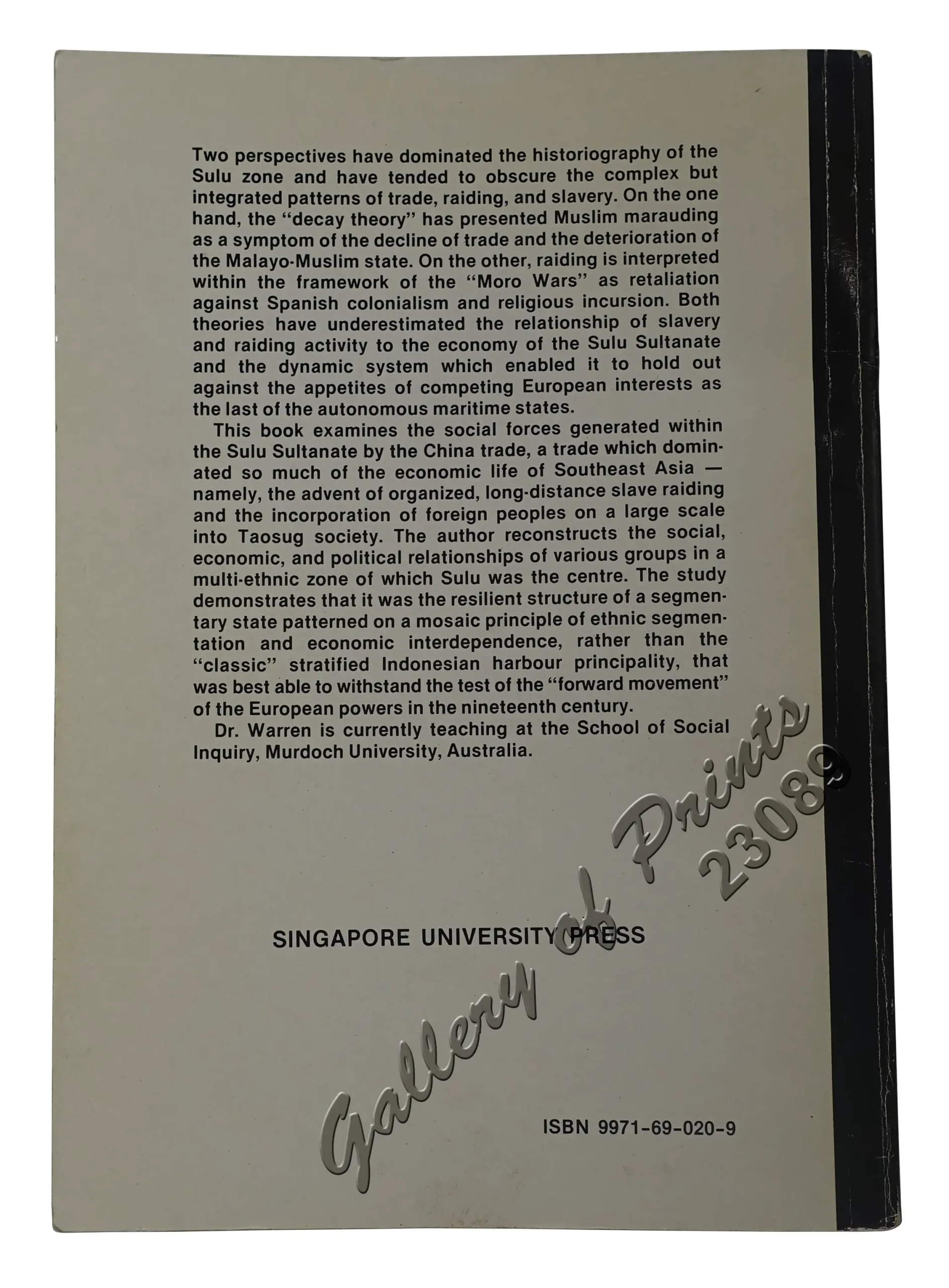
This book examines the social forces generated within the Sulu Sultanate by the China trade, a trade which dominated so much of the economic life of Southeast Asia — namely, the advent of organized, long-distance slave raiding and the incorporation of foreign peoples on a large scale into Taosug society. The author reconstructs the social, economic, and political relationships of various groups in a multi-ethnic zone of which Sulu was the centre. The study demonstrates that it was the resilient structure of a segmentation and economic interdependence, rather than the “classic” stratified Indonesian harbour principality, that was best able to withstand the test of the “forward movement” of the European powers in the nineteenth century.
The book is comprised of three major parts– Part 1: Patterns of Trading, 1768-1898 (Ch. 1-6), Part 2: Patterns of Raiding, 1768-1898 (Ch. 7-9), Part 3: Slavery (Ch. 10-11).
Published by Singapore University Press in 1981.
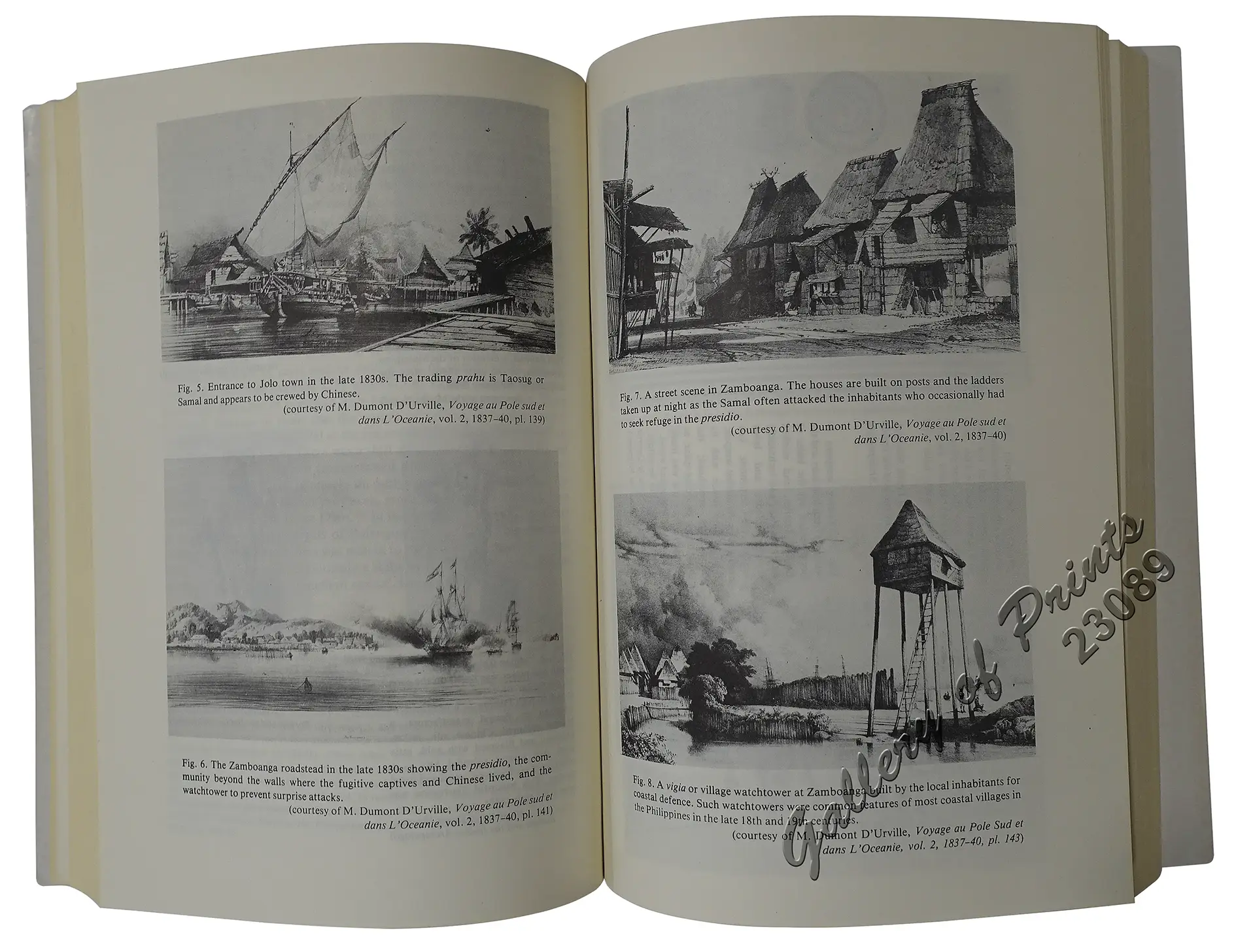
Book includes 4 plate reproductions on pp. 180-181 from M. Dumont D’Urville’s Voyage au Pole sud et dans L’Oceanie, vol. 2, 1837-40, the originals of which the Gallery of Prints offers for sale:
1. Corps de garde a Samboangan (Ile Mindanao), pl. 143
2. Rue de Samboangan (Ile Mindanao), pl. 142
3. Rada de Samboangan (Iles Mindanao), pl. 141
4. Entrée de la Riviere de Solo (Ile Solo), pl. 139


